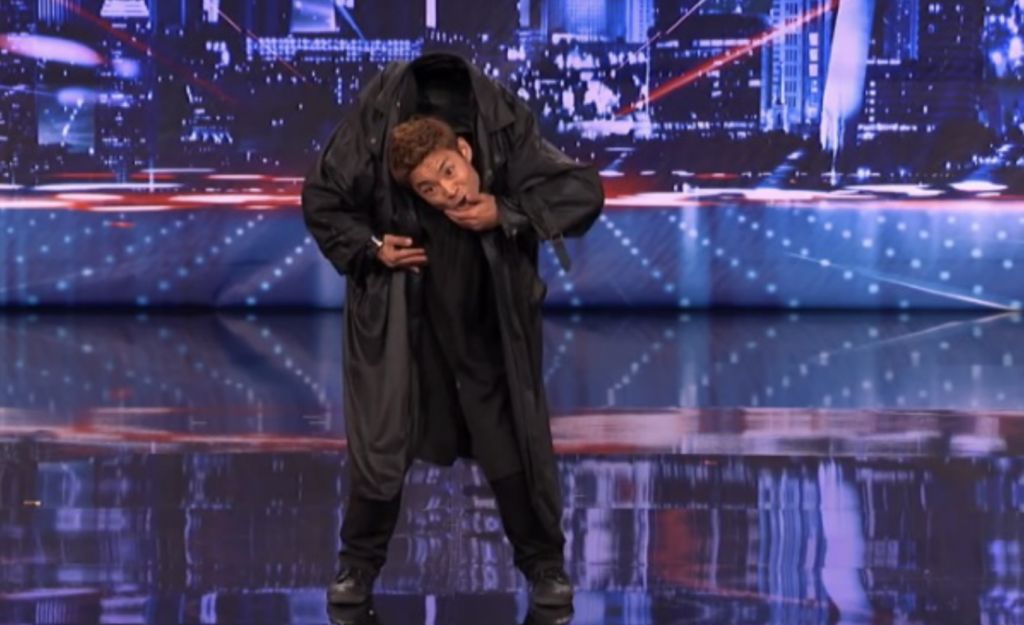

Let’s talk about Kenichi Ebina.
In 2013, this guy walked onto the America’s Got Talent stage and did something nobody had really seen before. And by the end of the season? He walked away with the whole thing.
Here’s the thing: Kenichi wasn’t a singer. He wasn’t a comedian or a magician. He was a movement artist from Japan, and his style was so unusual that people didn’t even have a word for it. Some just called it “dance-ish.” And honestly? That kind of fit.
Before all the fame
Kenichi was born in Japan back in 1974. In 1994, he packed his bags and moved to the United States. He went to the University of Bridgeport and picked up degrees in General Studies and Mass Communications. But his real education? That happened outside the classroom—through years of just messing around with movement, figuring out how to tell stories without saying a word, and training his body to do things that seemed almost impossible.
Long before TV came calling, Kenichi was already deep into his craft. And he wasn’t sticking to just one style. Nope. He was mixing hip-hop, martial arts, mime, robot moves, and theater into something that was completely his own.
So here’s what’s cool about Kenichi: he didn’t just dance. He created illusions.
When you watched him perform, you’d see him interact with invisible objects, fight invisible enemies, or move through imaginary worlds—all using nothing but his body, perfect timing, and insane control. No props. No fancy effects. Just him.
One of his signature tricks? Making it look like he was moving in slow motion, then snapping back to real speed without any warning. It felt like watching someone inside a video game or a sci-fi movie, except it was just a regular guy on an empty stage.
The AGT moment that changed everything
Kenichi’s audition was this “Matrix-style” routine that grabbed everyone’s attention right away. He moved like he was dodging bullets, freezing right in the middle of an action, then suddenly switching direction with robotic precision. The audience had no idea how he was doing it—but they couldn’t look away.
And as the competition went on? He just kept delivering. Round after round, Kenichi stayed true to himself. No gimmicks. No backup dancers. Just him, the stage, and whatever invisible world he decided to build that night.
And guess what? It worked.
When the Season 8 finale rolled around, Kenichi Ebina was announced as the winner. That win meant a lot more than just a trophy. He became:
- The first Asian performer to win America’s Got Talent
- The first dance-based act to take the crown
- The first non-traditional movement artist to win the show
Not bad for a guy doing something most people couldn’t even describe.
Life after winning
Winning AGT didn’t turn Kenichi into a household name in the way you might expect. But honestly? That was never really the point. He took his victory and just kept doing what he loved: performing.
He’s worked all over the world, appearing in live shows, festivals, and special events everywhere from here to Japan and beyond. He’s also moved into directing and creating multimedia performances, blending dance with projections and storytelling. And on top of all that, he’s spent time teaching and mentoring other performers who want to explore experimental movement.
Why people still remember him
What makes Kenichi Ebina stick in your memory isn’t just that he won. It’s that he won doing something completely original.
On a show packed with singers, dancers, and all kinds of variety acts, he stood out by refusing to fit into any neat little box. He didn’t follow the rules of traditional choreography. He made his own rules.
Kenichi proved that you don’t need props, costumes, or special effects to create something amazing. Sometimes, all you need is a body that’s learned to move in ways most people can’t even imagine—and the courage to walk onto a stage and trust that it’ll be enough.
And in 2013, it was more than enough. It was unforgettable.